
Non-VoIP vs VoIP Numbers: Why Apps Reject Your Virtual Number
Have you ever entered a virtual number during signup and instantly received a message saying, “This number cannot be used”? The number may work perfectly for…
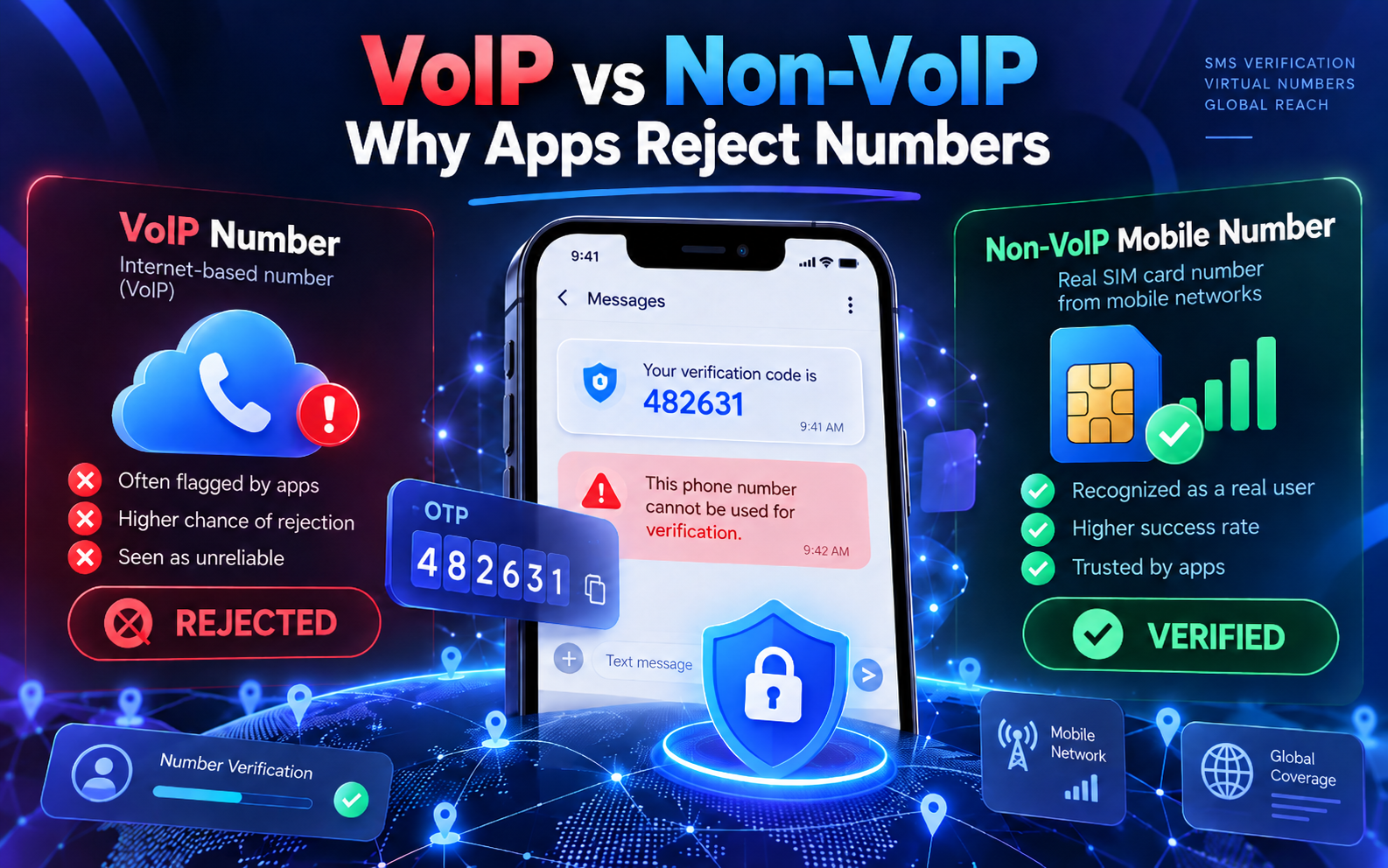
Have you ever entered a virtual number during signup and instantly received a message saying, “This number cannot be used”? The number may work perfectly for receiving SMS, but the app still refuses it.
The reason is usually not the SMS service itself. Many platforms check the type of number before sending a verification code. They look at whether the number is a VoIP number or a non-VoIP mobile number.
Understanding this difference can help you choose the right virtual number and avoid failed verification attempts.
What Is the Difference Between VoIP and Non-VoIP Numbers?
A phone number is not only identified by its digits. Mobile networks and telecom databases store information about every number, including its carrier and line type.
What Is a VoIP Number?
A VoIP number works through an internet-based phone service instead of a traditional mobile network.
These numbers are commonly used by:
Online calling services
Virtual phone apps
Cloud communication platforms
Internet-based SMS providers
When a platform checks a VoIP number, it can often see that the number belongs to an internet phone provider. Some apps consider these numbers higher risk because scammers and automated accounts frequently use them.
What Is a Non-VoIP Number?
A non-VoIP number is connected to a mobile carrier network.
Examples include:
Regular SIM card numbers
Mobile carrier numbers
Some eSIM and rented mobile lines
When checked by a carrier lookup system, these numbers usually appear as mobile numbers instead of VoIP.
This is why many strict platforms prefer non-VoIP numbers for account verification.
Why Do Apps Reject VoIP Numbers?
Most platforms use number verification systems before sending an SMS code.
When you enter a phone number, the service may check:
Line type
Carrier information
Country location
Previous usage history
Fraud risk signals
If the system detects a VoIP number, it may block the signup immediately.
The SMS message is never sent because the rejection happens before verification begins.
Virtual Does Not Always Mean VoIP
Many people think every virtual number is a VoIP number. This is not always true.
The important factor is not whether you personally hold a physical SIM card. The important factor is how the number is registered in telecom databases.
A virtual number can still be connected to a real mobile network. In that case, it may appear as a mobile number during verification.
The better question is:
“What type of number does the platform detect?”
Not:
“Is this number virtual?”
Other Reasons a Number May Fail Verification
A non-VoIP number can still be rejected. Apps consider several other signals.
Number Reuse History
Many cheap virtual numbers are shared between multiple users. If a number has already been used for many accounts, platforms may block it.
Country Restrictions
Some countries have higher fraud rates than others. A number from one country may work while another country’s number fails on the same platform.
Too Many Verification Attempts
Multiple signup attempts from the same device, IP address, or number range can trigger security systems.
Account Risk Factors
A new device, unusual location, and a recently purchased number together may look suspicious to automated security systems.
Why Free SMS Websites Often Fail
Free SMS receiving websites usually have two major problems.
First, many use VoIP numbers because they are cheaper to operate.
Second, their numbers are public. Anyone can view incoming messages, and thousands of users may have already used those numbers.
This creates privacy problems and increases the chance that platforms will reject them.
What To Do If Your Number Gets Rejected
If an app refuses your virtual number, try these steps:
Use another country number
Different countries often have different acceptance rates.Get a fresh number
A previously used number may already be flagged.Check the phone format
Make sure the country code and number format are correct.Try voice verification
Some platforms offer phone calls instead of SMS.Use a long-term number for important accounts
Temporary numbers are useful for short-term verification, but important accounts may require a number you can access in the future.
Final Thoughts
The main difference between VoIP and non-VoIP numbers is how telecom systems classify them.
VoIP numbers are often rejected because many platforms use line-type checks to reduce fake accounts and abuse. Non-VoIP mobile numbers usually have a better success rate, but factors like country, reuse history, and account behavior still matter.
When choosing a virtual number for SMS verification, focus on reliability, privacy, and mobile registration instead of only looking at price. A better-quality number can save time and prevent repeated verification failures.
Ready to try it yourself?
Get a Number Now